

About Hunter Admin
We help growing businesses become less dependent on the people holding everything together.
Hunter Admin is a business operations consultancy and outsourced support team for established, growing businesses.
We work with businesses that have clients, revenue and capable people, but where too much of the day-to-day operation still depends on a founder, MD or another key person.
- The decisions.
- The knowledge.
- The approvals.
- The problem-solving.
- The things that somehow always find their way back to the same person.
We identify where that dependency exists, change the way the operation works and provide practical capacity where it's needed.
Strategic enough to diagnose the problem. Practical enough to fix it.
Meet Gemma
The Founder Behind Hunter Admin
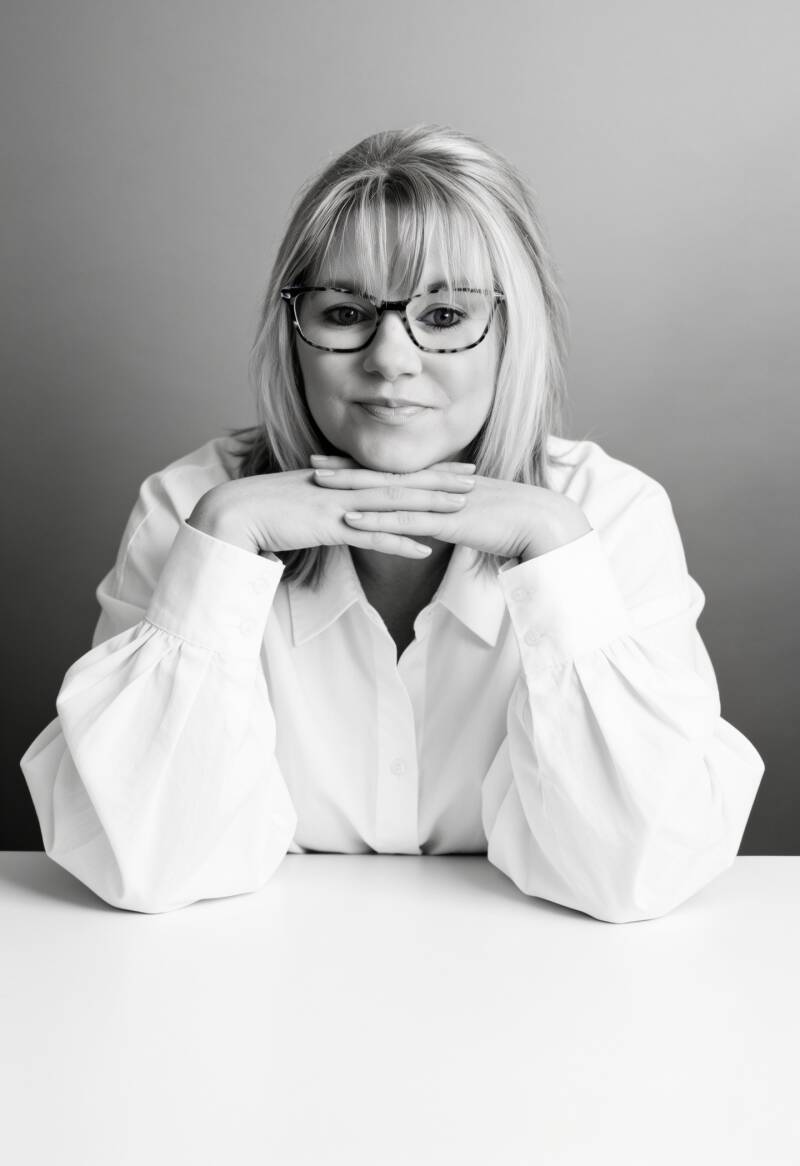
I'm Gemma Hunter, founder of Hunter Admin.
I didn't set out to build a business operations consultancy. Hunter Admin started from a much more practical place.
I began supporting business owners with the things that needed doing behind the scenes.
- Administration.
- Organisation.
- Systems.
- Processes.
And the closer I got to the day-to-day reality of different businesses, the more I noticed something.
The problems people were bringing me weren't always admin problems.
They were operational problems.
A process wasn't working because nobody really owned it. A team couldn't make a decision because responsibility had been delegated, but authority hadn't. A system wasn't being used because it didn't reflect how the work actually happened.
Important knowledge lived with one person because they'd always been the person who knew, and whenever something unusual happened, the normal process disappeared and everybody went looking for the same person.
The more I worked inside businesses, the more I saw the same pattern.
The business had grown, but its operational capacity hadn't always grown with it.
That's where the work changed.
Initially, I became interested in one question:
"What would happen if the founder wasn't there?"
Not because founders should disappear from their businesses. Quite the opposite.
A business should benefit from the experience, judgement, relationships and leadership of the people at the top, but it shouldn't need them for every routine decision, every answer or every process to keep moving.
That thinking became the foundation of the Founder Dependency Framework, and over time, something else became increasingly obvious.
It isn't always the founder.
The same dependency can develop around an MD, an operations manager, a senior employee, a client lead, or simply the person who's been there long enough to know how everything works.
That's why the work we do today looks beyond a job title.
We're interested in where the business relies too heavily on individual availability, knowledge or intervention, and what needs to change so more capability can sit within the business itself.
The Thinking Behind Our Work
Operational dependency tends to show up across five areas.
Decisions - Who can make what decision, and where are unnecessary decisions travelling upwards?
Knowledge - What does the business need particular people to know?
Delivery - Can work move confidently through the team without repeated intervention?
Revenue - Where do sales, relationships, delivery or retention rely heavily on particular individuals?
Resilience - What happens when somebody important isn't available?
These five areas began as the Founder Dependency Framework and continue to shape how we look at businesses today.
Because you can't solve dependency by simply telling people to delegate more.
You need to understand where the dependency exists, why it exists and what needs to change.
Our approach

Practical. Strategic. Human.
We're not interested in creating beautiful systems nobody uses. We're not interested in giving you a huge report and wishing you luck, and we're definitely not interested in becoming another thing your business depends on.
Good operations should make a business easier to run, not more complicated.
That means looking at how work actually happens. Talking to the people doing it. Understanding where it gets stuck. Working out which decisions genuinely need senior judgement and which don't. Creating clearer ownership. Building processes around reality rather than theory, and testing changes in the real business before declaring them finished.
Sometimes the answer is a new process. Sometimes it's a clearer decision boundary. Sometimes it's better documentation. Sometimes somebody needs the authority to make the decision they've technically been responsible for all along.
And sometimes the answer is simply:
"Stop doing that."
Good operations isn't about endlessly adding more. It's about making the business work better.
More than consultancy
Hunter Admin sits between traditional operations consultancy and outsourced business support, which matters, because sometimes a business needs somebody to step back and diagnose what's actually going wrong. Sometimes it needs hands-on support to redesign, implement and embed a change, and sometimes the operation works perfectly well. It simply needs more capacity.
That's why Hunter Admin brings together consultancy and a team of experienced associates who provide practical outsourced support. Our work follows a simple principle:
DIAGNOSE → REDESIGN → EMBED → SUPPORT
Not every client needs every stage. The point is that we don't have to recommend the same solution to every problem. If you need consultancy, we'll tell you. If you need practical support, we'll tell you, and if adding another person would simply give a broken process another person to travel through, we'll tell you that too.
What Matters To Us
| Building capability, not dependency. | We want the people inside your business to become more confident and capable. Our job isn't to make ourselves indispensable. It's to help create an operation that needs less unnecessary intervention from anybody. |
| Making the real problem visible | Operational problems don't always announce themselves neatly. They look like another approval. Another question. Another interruption. Another spreadsheet. Another thing that "only Sarah knows how to do". We look beyond the individual symptom to understand why it keeps happening. |
| Change that works in real life | A process can look perfect on paper and still fall apart on a busy Tuesday afternoon. We build and test around how people actually work. |
| Sustainable growth | More clients, more employees and more work should increase the capability of the business. They shouldn't simply increase the number of questions reaching the same people. |
| People | Operations is ultimately about people. Processes, systems and technology should help people do good work. Not make their jobs unnecessarily complicated. |
What Working With Hunter Admin Is Like
We'll ask questions. Sometimes quite a lot of them.
We'll want to know what happens when the normal process doesn't work. We'll probably be interested in the spreadsheet nobody talks about. We'll ask why that approval needs to happen.
And if everyone says:
"Oh, only one person knows how to do that."
We'll definitely want to know more. We won't hide behind consultancy jargon. And we won't change something simply for the sake of being able to say we've changed it.
You can expect thoughtful challenge, practical thinking and people who genuinely want to understand how your business works before deciding what it needs.

About our team

Hunter Admin is more than one person.
Alongside Gemma's consultancy work, our associate team provides outsourced administrative and operational support to businesses that need additional day-to-day capacity.
That means our clients can access both strategic operational expertise and practical support through the same business.
Our associates are matched to the work based on the support required, their experience and availability.
And while different people may deliver different parts of the work, our approach stays the same:
- Understand the business.
- Take ownership of the work.
- Communicate properly.
And don't create more work for the client than you're taking away.
A Little More About Me
Outside Hunter Admin, I'm a mum and someone who understands that running a business doesn't happen in isolation.
There are families. School runs. Unexpected phone calls. Days where your carefully planned schedule lasts until approximately 9:17am. Life happens.
Energy isn't unlimited, and business advice that sounds brilliant on paper doesn't always survive contact with an actual working week.
That's probably why my approach is deliberately grounded.
I'm not interested in helping build the theoretically perfect business.
I'm interested in helping build one that works in real life.

Your business doesn't need to stop needing good people.
It needs to stop depending on them for everything.
The aim isn't to make founders, MDs or experienced team members less important.
It's to make sure their time, knowledge and judgement are being used where they add the most value.
That's what we're building towards.
A business with greater capability across the team. An operation that can handle more as it grows. And fewer things that can only happen because one particular person is there to make them happen.